

IAP-26-084
Life at the extremes: linking Antarctic microbial diversity to novel biosynthetic potential using single-cell genomics
Microorganisms inhabiting Antarctica survive combinations of low temperature, nutrient limitation, high salinity, radiation and prolonged periods of dormancy. These environmental pressures have generated remarkable microbial diversity and adaptations, but much of this diversity remains inaccessible to conventional cultivation. Extreme environments may also harbour unusual biosynthetic pathways encoding specialised metabolites, peptides and other molecules that contribute to survival under environmental stress.
This project will investigate how adaptation and persistence in extreme Antarctic environments are reflected in the genomic and biosynthetic diversity of individual microorganisms. We will develop and apply single-cell genomic methods to recover bacteria, including dormant and spore-forming populations, from environmentally and chronologically characterised Antarctic marine sediment samples. These data will be combined with comparative genomics and biosynthetic gene-cluster analysis to identify adaptations associated with environmental persistence and previously unexplored biosynthetic potential.
The project has four linked research objectives:
1. Recover hidden microbial diversity from Antarctic sediments. Develop cytometry and single-cell sequencing approaches for individual bacterial cells and spores from archived environmental samples.
2. Determine how microbial genomes reflect extreme environmental conditions. Place recovered genomes into phylogenomic and environmental context and investigate genomic features associated with adaptation, persistence and dormancy.
3. Characterise the biosynthetic potential of extremophile genomes. Identify and compare biosynthetic gene clusters (BGCs), peptides and other candidate pathways, prioritising those that are evolutionarily divergent or associated with poorly characterised lineages.
4. Translate environmental genomic discovery into candidate natural products. Through a CASE partnership with Hexis Lab, apply AI-guided approaches to prioritise promising candidates and investigate their potential biological functions and applications.
The project therefore connects environmental microbiology with biotechnology without making product discovery the primary scientific question. Instead, it asks whether the environmental and evolutionary history of microorganisms living at the limits of life has generated distinctive biological and chemical diversity.

Click on an image to expand
Image Captions
Image showing barrel of gravity corer on the back deck of the R/V Nathanial B Palmer in the Weddell Sea (top left); A freshly split section of a marine sediment core (top right); Relative abundances of different Phyla in sedaDNA extracted from a marine sediment core collected from Marguerite Bay, Antarctic Peninsula (red circle on inset map). Data filtered at a detection limit of 0.05 and a prevalence of 2/100 calculated from sedaDNA using McMurdie PJ, Holmes S (2013) Phyloseq R package and Lahti L, Shetty S, et al. ( 2017) Tools for microbiome analysis in R. Microbiome package version 1.23.1. (lower).
Methodology
Antarctic environmental context
Archived Antarctic marine sediment material will be selected in collaboration with the British Antarctic Survey. Samples will be chosen to provide well-characterised environmental context, potentially including contrasts in sediment age, temperature history, productivity, salinity or other relevant environmental variables. Existing archived material means Antarctic fieldwork is not required for completion of the project.
BAS expertise will provide the sedimentological, chronological and palaeoenvironmental framework required to interpret microbial genomic observations as environmental biological data rather than simply collections of sequences.
Single-cell and single-spore genomics
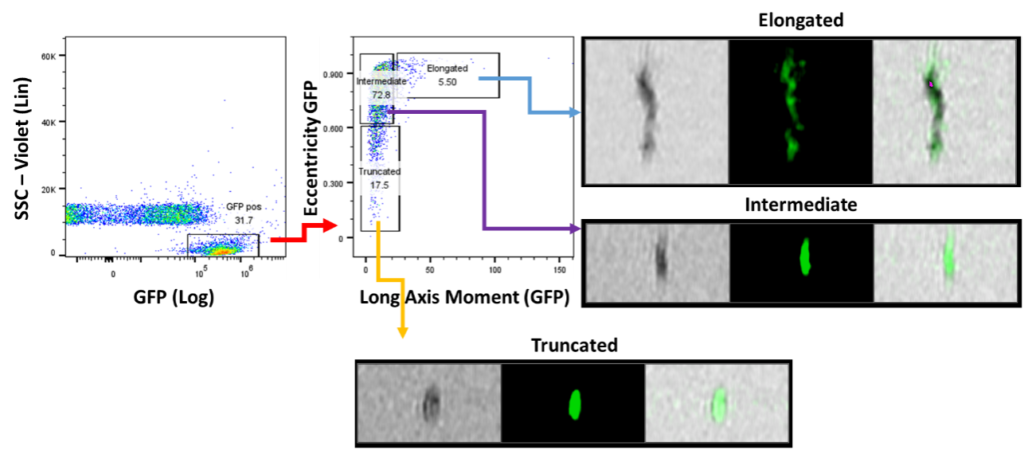
Microbial cells will be recovered from sediments and characterised using flow cytometry. Fluorescent and label-free characteristics will be explored to distinguish microbial populations and, where feasible, vegetative cells from dormant/spore-forming populations.
Individual cells or spores will be sorted, subjected to whole-genome amplification and sequenced. Method development will examine recovery efficiency, genome completeness and potential biases introduced by environmental sample type and single-cell amplification.
Where single-cell genomes identify particularly interesting taxa or genomic regions, complementary approaches including targeted enrichment, mini-bulk sorting, cultivation where feasible, and long-read environmental or isolate sequencing will be used to improve genome and BGC reconstruction.
Environmental and comparative genomics
Recovered genomes will be taxonomically classified and placed within publicly available genomic diversity using phylogenomic and comparative-genomic methods. Analyses will investigate genomic signatures associated with adaptation and persistence, including gene gain and loss, horizontal gene transfer, metabolic pathways, stress-response systems and sporulation/dormancy-associated functions.
Environmental metadata supplied through BAS will allow genomic variation to be interpreted in the context of the environmental history represented by individual sediment samples.
Biosynthetic diversity and CASE translation
Genomes will be screened for BGCs and other biosynthetic pathways and compared with characterised pathways to identify potentially novel families. Particular attention will be paid to complete or near-complete pathways, unusual pathway architectures and pathways occurring within poorly characterised environmental lineages.
During a 3–6 month CASE placement with Hexis Lab, the student will gain experience in translating environmental genomic discoveries into experimentally tractable candidates. Hexis Lab expertise in AI-guided bioactive discovery will be used to prioritise candidate molecules, peptides or biosynthetic systems according to predicted function, novelty and potential application. Where appropriate and feasible, selected candidates will progress towards in-silico or laboratory validation.
This creates a complete discovery pathway:
environment → individual microorganism → genome → biosynthetic pathway → candidate bioactivity
while maintaining the fundamental environmental-science question at the centre of the PhD.
Project Timeline
Year 1
Environmental and methodological foundations
• Training in Antarctic sediment ecology and palaeoenvironmental interpretation with BAS.
• Selection of archived sediment samples and associated environmental metadata.
• Development and optimisation of microbial/spore extraction and flow-cytometric sorting.
• Training in single-cell genome amplification, sequencing and bioinformatics.
• Pilot single-cell WGS to establish recovery rates and genome quality.
• Initial characterisation of microbial diversity across selected sediments.
Milestone: validated workflow for recovering genome information from individual environmental cells/spores.
Year 2
Single-cell environmental genomics
• Scale single-cell sorting and sequencing across selected Antarctic samples.
• Taxonomic, phylogenomic and comparative-genomic analysis.
• Investigate genomic characteristics associated with environmental persistence, stress adaptation and dormancy.
• Identify BGCs and other candidate biosynthetic pathways.
• Apply complementary long-read/cultivation approaches to priority organisms or pathways where appropriate.
Milestone: genome-resolved map of microbial and biosynthetic diversity across the selected environmental samples.
Year 3
Biosynthetic discovery and CASE translation
• Comparative analysis of BGC diversity, novelty and environmental distribution.
• Undertake 3–6 month CASE placement with Hexis Lab.
• Training in AI-guided candidate discovery and prioritisation.
• Integrate genomic, evolutionary and environmental evidence to identify priority candidate molecules/pathways.
• Where feasible, perform computational and/or experimental validation of selected candidates.
• Prepare primary research manuscripts.
Milestone: prioritised extremophile-derived biosynthetic candidates linked to their genomic and environmental origins.
Year 3.5
Integration and dissemination
• Integrate environmental, genomic and biosynthetic datasets.
• Complete manuscripts and thesis.
• Disseminate findings to environmental-genomics, microbial-ecology and biotechnology communities and explore follow-on opportunities with Hexis Lab and BAS.
Training
& Skills
The project will provide unusually broad interdisciplinary training spanning environmental science, genomics, data science and industrial biotechnology.
Newcastle University
• Flow cytometry and fluorescence-activated cell sorting.
• Single-cell microbial genomics and whole-genome amplification.
• Short- and long-read genome sequencing.
• Genome assembly, quality control and annotation.
• Comparative and population genomics.
• Phylogenomics, pangenome analysis and horizontal gene-transfer analysis.
• Biosynthetic gene-cluster identification and comparative genome mining.
• Reproducible computational analysis in Python/R and use of high-performance computing.
British Antarctic Survey
• Antarctic microbial ecology and extreme-environment biology.
• Marine sediment-core interpretation.
• Palaeoenvironmental and chronological datasets.
• Integration of biological data with environmental history.
• Understanding sample provenance, preservation and environmental metadata.
• Training in interdisciplinary polar science.
Hexis Lab CASE placement
• AI-guided natural-product and bioactive discovery.
• Candidate prioritisation from large biological datasets.
• In-silico assessment of candidate molecules and peptides.
• Understanding the pathway from fundamental discovery to experimental validation.
• Commercial R&D, innovation and intellectual property.
• Translational decision-making, including efficacy, safety, sustainability and potential application.
• Experience working within an industrial biotechnology environment.
The student will therefore develop both deep technical expertise in environmental single-cell genomics and the ability to translate fundamental environmental discoveries towards real-world applications.
References & further reading
Li et al. (2020) Prokaryotic Diversity and Composition of Sediments from Prydz Bay, the Antarctic Peninsula Region, and the Ross Sea, Southern Ocean. Frontiers in Microbiology, doi: 10.3389/fmicb.2020.00783.
Jamieson et al. (2013) Bacterial biodiversity in deep-sea sediments from two regions of contrasting surface water productivity near the Crozet Islands, Southern Ocean. Deep-Sea Research I, doi:10.1016/j.dsr.2012.12.012.
Tennant et al. (2022) In-situ sequencing reveals the effect of storage on lacustrine sediment microbiome demographics and functionality. Environmental Microbiome, doi:10.1186/s40793-022-00400-w.
Bawn et al. (2022) Single-cell genomics reveals population structures from in vitro evolutionary studies of Salmonella. Microbial Genomics, doi.org/10.1099/mgen.0.000871
