

IAP-26-017
Groundwater, emissions and air quality: unravelling hydrogeological and atmospheric linkages
Groundwater supports almost half of the world’s drinking water supply and approximately 40% of irrigated agriculture, making it a critical component of global water and food security. However, increasing abstraction, climate change and changing land-use practices are placing growing pressure on groundwater resources worldwide. While the impacts of groundwater abstraction on ecosystems and agricultural productivity are well established, its influence on other environmental systems remains less well understood. Groundwater abstraction is an example of multifaceted environmental challenge because it has strong influence on agricultural practices, energy demand, land management and ecosystem functioning, each of which can influence atmospheric emissions and air quality.
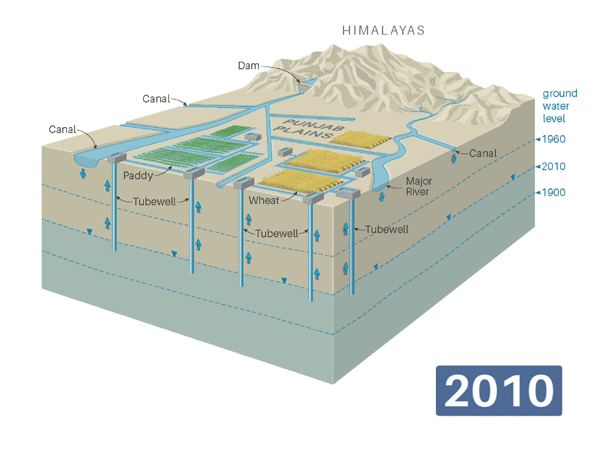
A notable example of this linkage has been observed in North-West India. In Punjab and Haryana large scale groundwater abstraction has led to significant groundwater depletion (MacAllister et al., 2022). In response, groundwater conservation initiatives have attempted to slow rates of depletion by changing cropping patterns. These changing cropping patterns have resulted in increased stubble burning in the region (Singh et al., 2019; Kant et al. 2022; Singha et al., 2021; Neelam et al., 2025), which has been blamed for poor air quality including in the National Capital New Delhi (Ghude et al. 2025).
Whilst the North-West India case provides a clear illustration of the groundwater-air quality nexus, it is unclear whether similar interactions occur elsewhere, what mechanisms drive them, and how significant they are relative to other drivers of air pollution. Beyond agricultural burning, potential pathways include increased energy demand for groundwater pumping (Qin et al. 2024; Koushki et al. 2022), dust generation associated with increased aridity because of groundwater depletion and land degradation, changes in greenhouse gas emissions from groundwater-dependent ecosystems, and the atmospheric deposition of pollutants in groundwater systems. Furthermore, there is emerging evidence of the direct role of groundwater depletion on global carbon emissions (Tong Sun et al., 2026) and natural groundwater discharge on methane emissions (Maglaya et al., 2026).
This PhD will use the Indian case study as a starting point to investigate the wider links between groundwater systems and air quality and emissions, identifying the mechanisms through which groundwater abstraction and management influence atmospheric pollution and assessing their relevance across different environmental and agricultural settings.
The overall aim of this project is to identify, quantify and evaluate the mechanisms through which groundwater systems influence air quality and global emissions (and vice versa), and to develop a framework for assessing the implications of these interactions for integrated management.
Click on an image to expand
Image Captions
Image 1: Illustration of the state of groundwater development in Punjab in the early 21st century. Paddy and wheat are grown in rotation, which often leads to stubble burning.
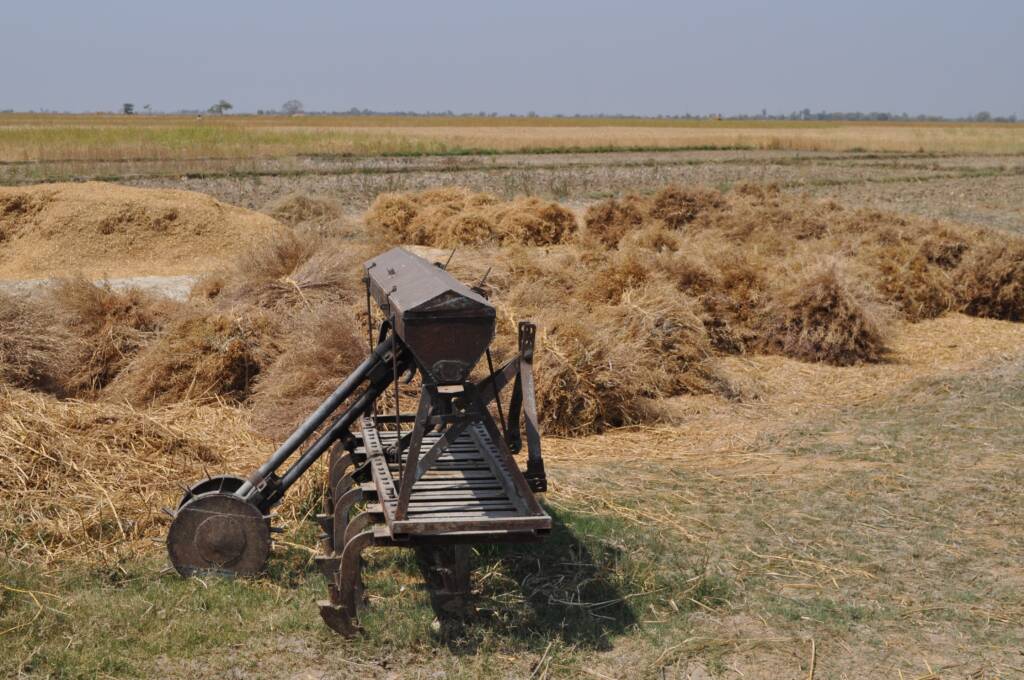
Image 2: Fields in northern India irrigated using groundwater. Stubble is commonly burnt late in the year before sowing the winter wheat crop.
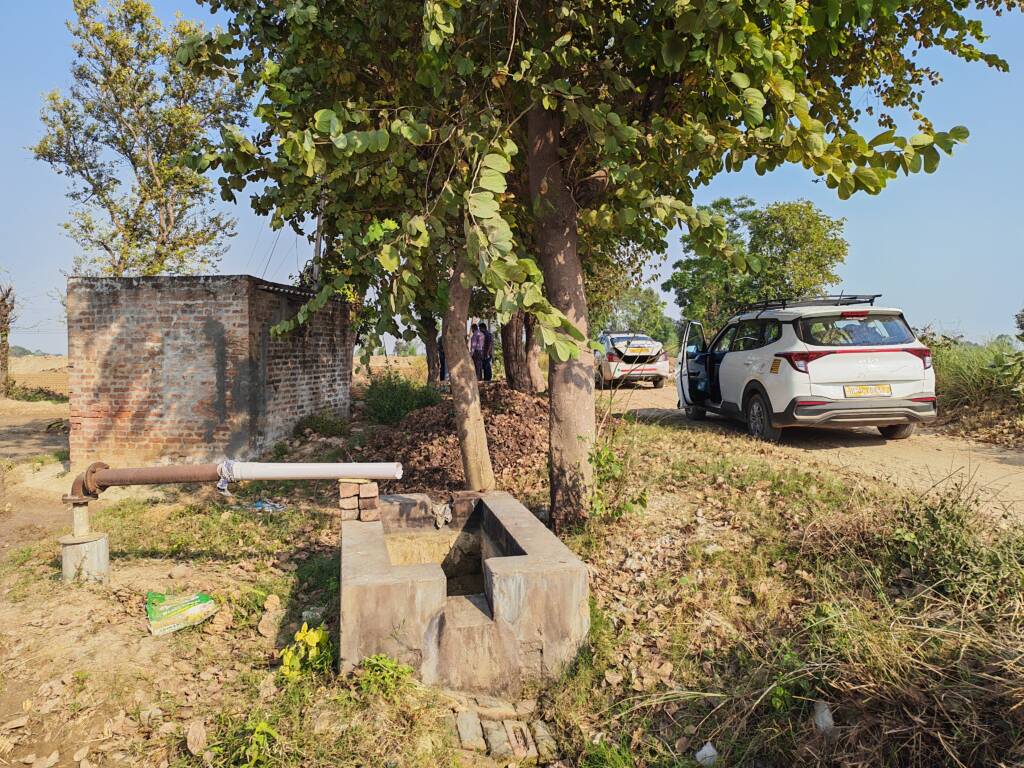
Image 3: A groundwater extraction point used for irrigation.
Methodology
The first phase of the research will identify and classify known and potential pathways linking groundwater systems and air quality through a systematic literature review. The review will consider mechanisms including groundwater abstraction and agricultural burning, emissions associated with groundwater pumping, dust generation linked to groundwater depletion, greenhouse-gas emissions from groundwater-dependent ecosystems, and atmospheric deposition of pollutants to groundwater systems. A conceptual framework will be developed to describe the groundwater-air quality nexus and identify key knowledge gaps.
The project will then investigate the groundwater-air quality nexus in North-West India, where groundwater conservation policies have been linked to changes in agricultural burning and regional air quality (Singh et al., 2019; Kant et al. 2022; Singha et al., 2021). Groundwater, land-use, fire occurrence and air-quality datasets will be analysed using statistical and geospatial approaches to evaluate relationships between groundwater storage change, cropping patterns, agricultural burning and atmospheric pollution. The conceptual model developed in the first phase will be refined for this local case study and used to develop a clear understanding of the drivers and impacts in North-West India.
Building on the findings of the literature review and India case study, at least one (and possibly two) additional case studies will be selected to represent different groundwater-air quality and/or emissions linkage mechanisms. These may include interactions associated with energy use for groundwater pumping (Qin et al. 2024; Koushki et al. 2022), dust generation following groundwater depletion, changes in greenhouse-gas emissions from groundwater-dependent ecosystems, or groundwater interactions with nature-based solutions (Davis et al., 2019). A combination of statistical, remote-sensing and geospatial analyses will be used to assess the significance of these relationships.
The final stage of the project will compare findings across all case studies, this will be used to further develop and refine the conceptual framework developed in the earlier stages of the project for understanding groundwater-air quality interactions and their implications for integrated management.
Project Timeline
Year 1
Year 1: Literature Review and Research Design
• Undertake a systematic literature review on groundwater-air quality interactions.
• Identify and classify potential linkage mechanisms.
• Develop a conceptual framework for the groundwater-air quality nexus.
• Acquire and process groundwater, air-quality, fire and land-use datasets. Extensive groundwater datasets already exist within BGS, but other datasets will have to be identified and collated.
• Define the analytical approach for the North-West India case study.
Year 2
Year 2: North-West India Case Study
• Analyse groundwater depletion, groundwater conservation policies and changes in agricultural practices.
• Quantify relationships between groundwater storage, crop residue burning and air quality.
• Apply statistical and geospatial methods to investigate causal linkages.
• Ground truth findings in North-West India.
• Identify at least two additional case studies representing different groundwater-air quality linkage mechanisms.
• Acquire and process datasets for the additional case studies.
Year 3
Year 3: Comparative Case Studies and Synthesis
• Design and implement analytical frameworks for the additional case studies.
• Investigate groundwater-air quality interactions within each study area using statistical and geospatial approaches.
• Potential to ground truth findings in second case study country.
• Compare findings across all case studies.
• Assess the relative importance of different groundwater-air quality pathways under contrasting environmental settings.
• Develop a generalised framework for understanding groundwater-air quality interactions.
Year 3.5
Year 3.5: Thesis Completion and Dissemination
• Synthesize findings from all case studies.
• Finalise the groundwater-air quality framework.
• Complete thesis writing, revision and submission.
Training
& Skills
During the first year, the student will receive training in research methods and core transferable skills as part of the PhD cohort at the University of Stirling. Throughout the PhD, the student will be offered the opportunity to attend MSc and undergraduate modules from the University of Stirling to extend their knowledge on skills related to environmental science, air quality, hydrology, research methods, quantitative analysis and coding skills. These could include auditing modules like Fundamentals of Remote Sensing, Analysis of Environmental Data and Applications in Earth Observation. The student will be encouraged to attend all Departmental/group research seminars and talks relevant to their field.
The student will be a part of the British Universities Funding Imitative (BUFI) scheme at BGS and will have access to training and networking opportunities. Where practical BGS will provide access to existing datasets, field equipment (if required), including water quality and water monitoring equipment. BGS will also provide training to undertake fieldwork.
The student will develop expertise in:
• Hydrogeology and environmental systems analysis.
• Air quality science and the interactions between water, land and atmospheric processes.
• Systematic literature review and evidence synthesis.
• Environmental data analysis and statistical modelling.
• Development of conceptual frameworks for complex environmental problems.
References & further reading
Balwinder-Singh, McDonald, A.J., Srivastava, A.K. et al. Tradeoffs between groundwater conservation and air pollution from agricultural fires in northwest India. Nat Sustain 2, 580–583 (2019). https://doi.org/10.1038/s41893-019-0304-4
Davis, M.P., Groh, T.A., Jaynes, D.B., Parkin, T.B. and Isenhart, T.M. (2019), Nitrous Oxide Emissions from Saturated Riparian Buffers: Are We Trading a Water Quality Problem for an Air Quality Problem?. J. Environ. Qual., 48: 261-269. https://doi.org/10.2134/jeq2018.03.0127
Ghude, S.D., Kalita, G., Jat, R. et al. The role of atmospheric feedback and groundwater conservation policies in degrading air quality in Delhi. npj Clean Air 1, 12 (2025). https://doi.org/10.1038/s44407-025-00012-x
Kant, Y., Chauhan, P., Natwariya, A. et al. Long term influence of groundwater preservation policy on stubble burning and air pollution over North-West India. Sci Rep 12, 2090 (2022). https://doi.org/10.1038/s41598-022-06043-8
Koushki, R., Warren, J. & Krzmarzick, M.J. Carbon footprint of agricultural groundwater pumping with energy demand and supply management analysis. Irrig Sci 42, 735–744 (2024). https://doi.org/10.1007/s00271-023-00885-4
MacAllister, D.J., Krishan, G., Basharat, M. et al. A century of groundwater accumulation in Pakistan and northwest India. Nat. Geosci. 15, 390–396 (2022). https://doi.org/10.1038/s41561-022-00926-1
Maglaya, R.C., Sadat-Noori, M. & Andersen, M.S. Groundwater Discharge: A Major Driver of Global Methane Emissions from Aquatic Environments. Earth Syst Environ 10, 2693–2705 (2026). https://doi.org/10.1007/s41748-025-00788-8
Neelam, N., Rathee, R.K. & Mishra, S.K. Unraveling the nexus between crop residue burning and air quality in Haryana state, India. Paddy Water Environ 23, 111–128 (2025). https://doi.org/10.1007/s10333-024-01002-7
Singha, M., Dong, J., Ge, Q., Metternicht, G., Sarmah, S., Zhang, G., … & Xiao, X. (2021). Satellite evidence on the trade-offs of the food-water–air quality nexus over the breadbasket of India. Global Environmental Change, 71, 102394. https://doi.org/10.1016/j.gloenvcha.2021.102394
Sun, T., He, L., Zhang, F. et al. Groundwater depletion contributes to an increase in global carbon emissions. Nat Commun 17, 6627 (2026). https://doi.org/10.1038/s41467-026-73521-2
Qin, J., Duan, W., Zou, S. et al. Global energy use and carbon emissions from irrigated agriculture. Nat Commun 15, 3084 (2024). https://doi.org/10.1038/s41467-024-47383-5
