

IAP-26-081
Predator visual adaptations for breaking camouflage
Understanding the sensory ecology of camouflage provides a unique window into the evolutionary ecology of predator-prey interactions. Much recent research has investigated how prey coloration defends against predators. However, predator adaptations for breaking camouflage have been relatively understudied. This project will investigate the role of two visual adaptations that have been hypothesized to beat camouflage – stereopsis and a sensitivity to second-order motion.
Stereopsis is the ability to calculate depth by comparing the views of the two eyes. It has been shown in several vertebrates and one insect predator: the praying mantis. Importantly, it has been suggested to enable predators to spot perfectly camouflaged items since they stand out in relief. Yet the advantage it conveys against camouflage has not been explicitly tested.
Camouflage could also interfere with the ability to intercept moving objects. Predators can easily track a black target on a grey background. However, intercepting targets matching the background (e.g. grey on grey) is more difficult. This is achieved by an ability to exploit ‘second-order motion’ cues, correlating more complex visual statistics over time. This ability is known in humans and has recently been discovered in mantises, but we know little about how it helps against different forms of camouflage.
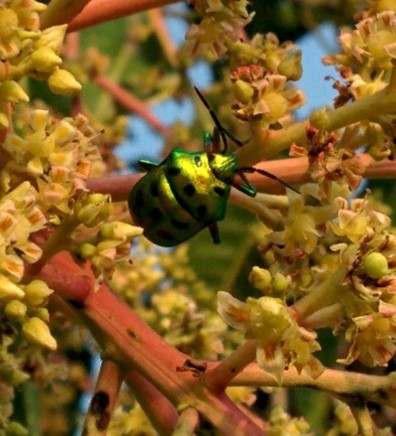
In this project we will first compare different species of mantises on their ability to detect and capture camouflaged prey using a 3D insect cinema, and investigate how different brain regions are adapted for this (Aim 1). We will then adapt recent computational models for both stereopsis and second-order motion for each species of mantis and see which components are essential for camouflage breaking (Aim 2). We will further develop an evolutionary simulation where virtual prey will be tested against live mantises and humans to investigate the evolution of camouflage in response to these visual adaptations (Aim 3). Finally, we will examine whether traits such as iridescence and escape reflexes of real prey defend against these visual adaptations (Aim 4). The project thus combines behavioural and sensory ecology with computational approaches to reveal the coevolution of patterns and visual systems.


Click on an image to expand
Image Captions
Mantis with 3D glasses (c) Vivek Nityananda,Mantis in position in the 3D insect cinema (c) Vivek Nityananda,Iridescent prey (c) Vivek Nityananda
Methodology
We will choose three mantis species with differing predatory strategies (ambush, cursorial, generalist). The capability of stereopsis across these species to break camouflage will be tested in an insect 3D cinema (Aim 1). Using a computer screen and 3D glasses, predators will be presented camouflaged moving prey with or without stereo depth cues. Predator accuracy will be measured throughout using the latency, angle and probability of a response. We will then test the functional evolution of brain structures across species by visualising them using immunostaining and imaging and correlating changes to performances in experiments Computational models of vision developed by VN will be modified and tested on different camouflaged stimuli to assess which aspects of visual processing enable camouflage breaking in a 3D cinema set-up (Aim 2). For Aim 3, virtual stimuli varying along multiple dimensions (spatial frequency, speed, contrast) will be presented to predators. Their responses will exert a selection pressure on prey visual characteristics. This will form an evolutionary simulation revealing adaptive forms of camouflage. Finally, behavioural experiments with mantises and real and 3D printed prey will be conducted in the lab to test how iridescence and specular reflections interfere with prey capture (Aim 4). VN and JH will supervise the student on psychophysics and visual programming. OR will supervise the student on brain imaging techniques. JH will supervise the student on the theory underlying iridescence. VN will supervise the behavioural experiments, and the CASE placement supervised by AA-A will help develop computational models and enhance skills on automating tracking behaviour using AI techniques.
Project Timeline
Year 1
Month 1-6: Literature review, introduction to insect care and construction of set-up. Month 7-9: Iridescence and prey capture experiments. Month 10-12: Brain imaging experiments.
Year 2
Month 1-5: Experiments on 3D disparity and camouflage breaking in the 3D insect cinema. Month 6-10: Experiments assessing camouflage effectiveness against computational models of vision. Attending a national/European conference. Months 10-12: Brain imaging experiments
Year 3
Month 1-3: Developing the evolutionary simulation. Month 4-12: Running evolutionary simulations. Attending a training course and an international conference.
Year 3.5
Month 1-6: Thesis write-up
Training
& Skills
The supervisory team is uniquely interdisciplinary and have complementary expertise. They can thus train students from different disciplines (ecology/psychology/physics) and the student will be trained in a suite of experimental and computational skills and areas including: 1) Behavioural and sensory ecology 2) Programming of visual stimuli and computational approaches to ecology 3) AI-based video analysis 4) Brain immunostaining and visualisation 5) Insect care and maintenance 6) Data processing and statistical analysis 7) Scientific writing 8) Presentation skills through conferences, lab meetings, and public outreach
References & further reading
Robert, T., Tan, Y.T., Ganot, D., Loh, Y.J. and Nityananda, V., 2025. Prior cueing affects the saccadic response to targets in the praying mantis Sphodromantis lineola. Journal of Experimental Biology, 228(11), p.jeb249296.
Nityananda V, O’Keeffe J, Umeton D, Simmons A, Read JCA. Second-order cues to figure motion enable object detection during prey capture by praying mantises. Proceedings of the National Academy of Sciences of the United States of America 2019, 116(52), 27018-27027.
Nityananda V, Tarawneh G, Henriksen S, Umeton D, Simmons A, Read JCA. A Novel Form of Stereo Vision in the Praying Mantis. Current Biology 2018, 28(4), 588-593.
Hancock, G.R., Briolat, E.S., Hughes, A.E., Kelley, L.A. and Troscianko, J., 2026. Butterfly wing patterns in flight create powerful illusory motion cues. Nature, pp.1-5.
Troscianko J, Skelhorn J, Stevens M. Camouflage strategies interfere differently with observer search images. Proceedings of the Royal Society Series B 2018, 285, 20181386.
Umeton, D., Tarawneh, G., Fezza, E., Read, J.C. and Rowe, C., 2019. Pattern and speed interact to hide moving prey. Current Biology, 29, 3109-3113.
Troscianko J, Skelhorn J, Stevens M. Camouflage strategies interfere differently with observer search images. Proceedings of the Royal Society Series B 2018, 285, 20181386.
Halpin, C. G., Penacchio, O., Lovell, P. G., Cuthill, I., Harris, J., Skelhorn, J. & Rowe, C., Pattern contrast influences wariness in naïve predators towards aposematic patterns, 2020, Scientific Reports. 10, 8 p., 9246.
Kjernsmo, K., Whitney, H.M., Scott-Samuel, N.E., Hall, J.R., Knowles, H., Talas, L. & Cuthill, I.C. 2020. Iridescence as camouflage. Current Biology 30, 551-555.
