

IAP-26-087
Jobs for the Boys: Investigating the Social and Cultural Functions of Adult Males in Polygynous Mammals beyond reproduction.
Classical behavioural ecology predicts that males in polygynous mammalian species invest primarily in mating effort rather than parental care, playing relatively little role in juvenile development once reproduction has occurred [1-3]. Extended care and social interaction between adult males and juveniles have been observed among primate species [4, 5], but beyond primates adult males are typically viewed as competitors, territory holders or guardians of reproductive opportunities rather than contributors to social development [6,7]. However, preliminary observations during our own behavioural research on non-primate polygynous mammalian systems suggest this view may be incomplete.
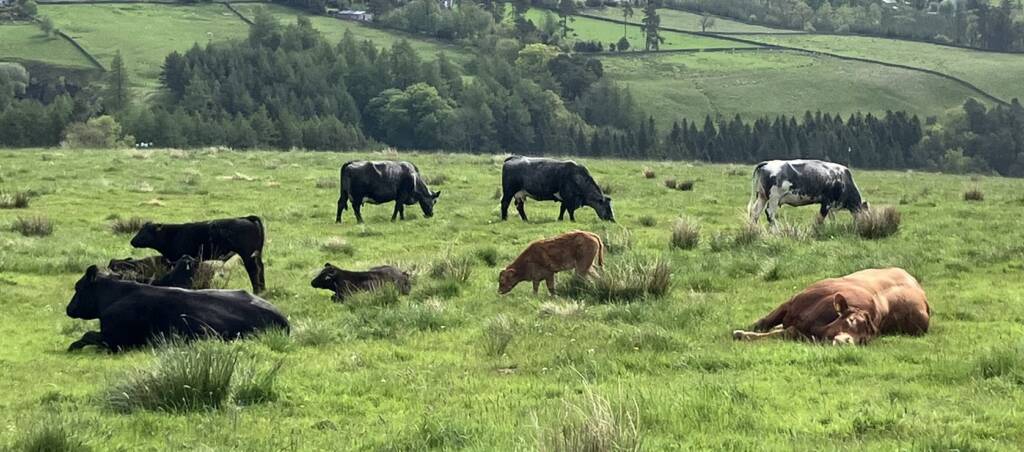
Our own observations of grey seals (Halichoerus grypus) outside of the well-defined breeding season suggest that juveniles and subadults appear to spend disproportionate amounts of time in close proximity to adult males, engaging in play and affiliative interactions (Sime & Twiss pers. obs, in prep). We have observed similar patterns in upland beef cattle, where calves often appear to aggregate around mature bulls despite no kinship relationship. These observations raise an important question: do adult males provide social functions that have been overlooked in polygynous mammals and how widespread might such behaviour be?
Research Aim: To determine whether adult males play important roles in social development, social learning and cultural transmission within classically polygynous mammalian societies, despite providing little direct parental care.
Research Questions:
1. Do juveniles preferentially associate with adult males?
2. Are these associations driven solely by protection (antipredator or environmental), or do they involve active social interactions?
3. Do juveniles gain behavioural or social benefits from these relationships?
4. Are there reciprocal benefits for adult males?
5. Do adult males act as key nodes in the transmission of social knowledge and culture within populations?


Click on an image to expand
Image Captions
Fig. 1: Aggressive behaviour more typically associated with males in polygynous mammals,Fig. 2: Male grey seals do however also exhibit more affiliative, positive social interactions.,Fig. 3: A typical small upland beef cattle herd – what form of social interactions occur between calves and the (unrelated) bull?
Methodology
The project will use a comparative approach combining a wild and a managed (domesticated) study system where mating is polygynous and males are regarded as providing no parental care:
• Grey seals at UK haul-out sites where mixed sex and age aggregations occur outside of the breeding season provide opportunities to examine natural social relationships among animals that are individually identifiable via their natural pelage variation. In addition, an archive of high-resolution video footage of grey seal behavioural interactions will be available for further data mining.
• Upland beef cattle herds, providing accessible and replicated systems in which male-juvenile interactions can be observed at high resolution in groups with known pedigrees, ages and reproductive histories.
For each system the student will:
• Develop detailed ethograms of male-juvenile interactions.
• Use these ethograms to conduct field-based behavioural observations of interactions between known individuals (and sex-age classes) within each study system, combining in-field observations with video recording for subsequent decoding of details of behavioural interactions.
• Conduct spatial mapping of identified individuals and the larger ‘herd’ on a regular basis to record spatial proximity.
• Apply social network analysis to quantify patterns of association and influence.
• Compare interaction frequencies and network positions of adult males, females and juveniles.
• Investigate evidence for social learning, behavioural development and potential cultural transmission pathways.
Interdisciplinary Dimension:
The project integrates behavioural ecology, animal social networks and social science perspectives on role-modelling and intergenerational learning. The research will explore whether the importance of non-parental adult males is a widespread feature of mammalian social systems that has been underestimated by traditional parental investment theory. Potential collaborations with sociology or anthropology could also facilitate the development of broader theoretical frameworks concerning the evolution of male social roles in complex societies.
Expected Outcomes and Impact:
This project will provide the first systematic test of whether adult males perform socially significant developmental and cultural functions in highly polygynous mammals beyond primate examples [4, 5]. By challenging assumptions that males contribute only through competition and reproduction, the research has potential to reshape understanding of social evolution, animal culture and the maintenance of mammalian societies.
The findings will contribute to debates on social learning and cultural resilience in animal populations, while offering a scientifically grounded perspective on the evolutionary origins of male social roles. Through its combination of behavioural ecology, social network analysis and social science, the project aligns strongly with IAPETUS priorities for interdisciplinary environmental research addressing both fundamental science and wider societal questions. At a time when human societies are actively debating the role of men as mentors, role models and contributors to community cohesion, this project provides a rare opportunity to examine the evolutionary origins of positive male social functions through a comparative study of non-human mammalian societies.
Project Timeline
Year 1
Initial work will involve compiling a literature review of male social roles across mammalian taxa with a focus on positive social interactions with juveniles. In addition, during the first six months of the project the student will focus on developing ethograms for grey seals and cattle based on pre-existing video footage and literature. The student will conduct preliminary behavioural observations (data collection) from the archived video footage to (a) establish and refine observational protocols prior to field campaigns and (b) start to build the behavioural database. During the winter of year 1 the student and supervisor(s) will visit potential grey seal study sites to identify the best options for subsequent field campaigns. Assuming the study commences in October of year, the first field campaign will be a spring/summer period of behavioural observations on multiple discreet upland beef cattle herds during this period when calves are in enclosed field with their mothers in herds with a single bull.
Year 2
Tasks in year 2 will be to continue decoding archived grey seal footage and to start building analytical frameworks (develop code in R) and initiating test runs on test-data and data derived to date. In the winter of year 2 the student will commence the first seal field campaign (after the autumnal grey seal breeding season) to collect data on grey seal interactions. A second period of behavioural observations on multiple discreet upland beef cattle herds will be completed in spring/summer.
Year 3
In the first six months of year 3 the student will focus on completion of behavioural data extraction form videos. In the latter half of the year the focus will move on to initial analysis of data and drafting of results for publication and submission of a paper (or papers). The student will also attend and present their research at national and international conferences. Towards the end of year 3 the student will commence writing-up their thesis.
Year 3.5
Further submission of papers.
Finalising thesis write-up.
Training
& Skills
Potential candidates should have a sound understanding of key concepts, practice and current issues within ethology and behavioural and evolutionary ecology. However, specific experience with the study systems is not essential as the student will gain in-depth training in these areas. Supervisors at both Durham and St Andrews (Sea Mammal Research Unit) will provide extensive training in marine mammal biology and research techniques and ethological approaches specific to pinniped behavioural studies.
Specific training for the field context involved in this study will be provided, along with more general field campaign skills including fieldwork logistics and health and safety. Candidates should be able to demonstrate their willingness and ability to conduct prolonged periods of field based behavioural observations, while remaining focused, dedicated and enthusiastic.
In addition, candidates will gain training to enhance their data analytical skills, including application of modern ecological and statistical modelling techniques, in particular social network analysis. Experience with R and/or analysis of behavioural data will be advantageous to applicants, but training in these areas will be provided by the supervisory team complimented by wider training at opportunities at Durham University (e.g. data analysis and visualisation, science communication).
Training in scientific writing and communication/presentation will be provided by the supervisory team and the wider training at opportunities at Durham University, included opportunities to learn about outreach and media engagement. The student will be expected to present their work at relevant departmental and national and international conferences throughout their PhD, and training in delivering effective presentations will be provided by the supervisory team.
The student will be introduced to and encouraged to contribute to meetings of wider research groupings within Durham University (spanning sociology, anthropology, psychology and philosophy). These fora will enhance the scope for wider development of theoretical frameworks concerning the evolution of male social roles in complex societies.
References & further reading
References:
1. Trivers, RL. 1972 Parental investment and sexual selection. Sexual selection and the descent of man, 1871–1971 (ed. & Campbell, B), pp. 136–179. Chicago, IL: Aldine-Atherton.
2. Emlen, ST, Oring, LW. 1977 Ecology, sexual selection, and the evolution of mating systems. Science, 197, 215–223. (doi:10.1126/science.327542).
3. Andersson, M. 1994 Sexual selection. Monographs in Behavior and Ecology. Princeton, NJ: Princeton University Press.
4. Rosenbaum S, Silk JB. Pathways to paternal care in primates. Evolutionary Anthropology. 2022; 31: 245–262. https://doi.org/10.1002/evan.21942
5. Granell-Ruiz, Maria, Josefien A. Tankink, Erica van de Waal, and Carel P. van Schaik. preprint.Beyond Paternal Care: Career Stage and Reproductive Opportunities Shape Male Services in Vervet Monkeys. https://doi.org/10.64898/2026.06.22.733760.
6. Székely T, Webb J N & Cuthill I C. 2000. Mating patterns, sexual selection and parental care: an integrative approach. IN ‘Vertebrate Mating Systems’, M. Apollonio, M Festa-Bianchet & D. Mainardi (eds), 2000, World Science Press, London pp 194-223.
7. Clutton-Brock TH, Huchard E. 2013 Social competition and selection in males and females. Phil. Trans. R. Soc. B, 368, 20130074. (doi:10.1098/rstb.2013.0074)
Further reading:
Twiss, S., Bishop, A., & Culloch, R. (2022). The Gray Seal: 80 Years of Insight into Intrinsic and Extrinsic Drivers of Phocid Behavior. In D. P. Costa & E. A. McHuron (Eds.), Ethology and Behavioral Ecology of Phocids (pp. 313-360). Springer Verlag. https://doi.org/10.1007/978-3-030-88923-4_9
Shuert, C. R., Pomeroy, P. P., & Twiss, S. D. (2025). Stress-coping styles are associated with energy budgets and variability in energy management strategies in a capital breeder. Proceedings of the Royal Society B: Biological Sciences, 292(2046), Article 20241787. https://doi.org/10.1098/rspb.2024.1787
Twiss, S. D., Shuert, C. R., Brannan, N., Bishop, A. M., & Pomeroy, P. P. (2020). Reactive stress-coping styles show more variable reproductive expenditure and fitness outcomes. Scientific Reports, 10(1), Article 9550. https://doi.org/10.1038/s41598-020-66597-3
Robinson, K. J., Twiss, S. D., Hazon, N., Moss, S., & Pomeroy, P. P. (2017). Positive social behaviours are induced and retained after oxytocin manipulations mimicking endogenous concentrations in a wild mammal. Proceedings of the Royal Society B: Biological Sciences, 284(1855), Article 20170554. https://doi.org/10.1098/rspb.2017.0554
Bishop, A., Pomeroy, P., & Twiss, S. (2015). Variability in individual rates of aggression in wild gray seals: fine-scale analysis reveals importance of social and spatial stability. Behavioral Ecology and Sociobiology, 69(10), 1663-1675. https://doi.org/10.1007/s00265-015-1978-x
Robinson, K., Twiss, S., Hazon, N., Moss, S., Lonergan, M., & Pomeroy, P. (2015). Conspecific recognition and aggression reduction to familiars in newly weaned, socially plastic mammals. Behavioral Ecology and Sociobiology, 69(8), 1383-1394. https://doi.org/10.1007/s00265-015-1952-7
